Civil Charge, Serious Consequences
In Wisconsin, if you have “failed” a breath or a blood test, you may have only 10 days to request a hearing, or you will lose your license. You may still be eligible for an occupational license, but this restricts you to driving to and from work at designated times. After an OWI, time is of the essence. If you submitted to a chemical breath or blood test other than the on-scene hand-held breath test device, you should have received a document titled “NOTICE OF INTENT TO SUSPEND” if your breath or blood test result was 0.08 or higher.
You have 10 days from the notice date to request an administrative hearing with the Wisconsin Department of Transportation. These hearings are limited in scope, but they are the only way to attempt to avoid a pre-conviction suspension. They can also play a huge role in your OWI case strategy. Failing to request a hearing within the first 10 days will result in an automatic six-month suspension of your driving privileges, which begins thirty days from the notice date.
While requesting the hearing may not prevent a suspension, it does give you an opportunity down the road to request that the court stay your suspension (essentially putting it on pause) while the case is pending. If you drive for a living, or if you cannot afford to have any type of driving restriction on your record, it is imperative that we help you handle this hearing.
Don't Face a First DUI Without a Lawyer
Don’t be fooled by the “civil” label. First-offense OWI charges in Wisconsin can derail your life. Even without jail time, a conviction means fines, license loss, and a permanent record. Many drivers assume they don’t need a lawyer. They’re wrong. At Mishlove and Stuckert, LLC, you can get a free consultation that puts your case into perspective. If you don’t need a lawyer, we’ll tell you. But if you do, we’re your best shot. We can help you avoid:
In most cases, first offense drivers will not receive jail time unless they had a minor in the vehicle or caused harm to others. However, jail time or probation are very real possibilities in many OWI/DUI cases. Although probation is typically given in exchange for less jail time, it can still impact your life. If your probation involves frequent check-ins with your probation officer or wearing an ankle monitor, your life will be seriously disrupted.
If you depend on your car to get to work or care for your family, as most of us do, a license revocation can affect your employment and your family life. Some jobs, including truck driving or delivery jobs, require you to drive, so a license suspension can mean you're completely unable to perform your duties and risk losing your source of income.
If you are convicted of a Wisconsin OWI/DUI for the first time, this offense will typically still show on a background check when potential new employers check your driver’s record. A repeat offense will also show on criminal background checks and may prevent an employer from considering you for a job.
Even though most jail sentences allow for work release, also called the Huber Law in Wisconsin, the jails always coordinate the work release with your employer. So, there may be a career consequence. If you need to drive for a living, an OWI/DUI charge can ruin a career.
In addition to the short-term fines that you will be responsible for paying, you can also expect your auto insurance rates to increase after an OWI/DUI. Over the years, this cost increase can dramatically inflate your expenses and hurt your budget.
A first-offense OWI in Wisconsin can be charged as a civil violation, but the penalties stack up across several areas of your life.
Drivers license revocation can range from six to nine months. Unless there is a refusal violation associated with your DUI case, you should be able to obtain an occupational license that will allow you to drive to and from work within set time periods.
If you submitted to a chemical test of your breath or blood and your blood alcohol content (BAC) came back 0.15 or higher, you face a one-year ignition interlock device (IID) order. An IID order will require you to install an IID in every vehicle registered or titled to you.
You must complete the Alcohol and Other Drug Assessment in the county where you reside, as well as treatment courses or a driver’s safety plan. If you do not live in Wisconsin, you will have to follow through with an equivalent alcohol treatment plan in your home state.
If you are convicted, you will have to pay a forfeiture ranging from $150 to $300, plus additional court costs. Additional court costs vary throughout the different Wisconsin jurisdictions. A $150.00 fine plus costs, for example, is usually about $811.50.
How We Defend First-Offense OWI Cases
Andrew Mishlove and Lauren Stuckert have defended drunk driving cases for over 50 years. In this time, we have developed various tactics for winning OWI/DUI cases. As Wisconsin’s only true accredited OWI/DUI specialists, we have the training, experience, and skills to handle the most difficult drunk driving cases.
We always remember that an OWI/DUI is not just a collection of facts. It is a human drama involving a person with a life history, a family, a job, and hopes and dreams. The best DUI attorneys know how to show that entire drama in court. Here is how we might organize it:
Even the most ethical people can be charged with a OWI/DUI. You are not just someone who got a DUI. You are a human being with a life, career, and family. Our DUI attorneys will listen to you and compile the whole story, with the positive details about your life. The goal is to tell a human story that persuades people to see your side of things. You are not just a defendant in a drunk driving case. You are a person.
We want to know what led up to your drunk driving charge. In any OWI case, there is a story to be told. Andrew Mishlove and Lauren Stuckert will listen to the details of your case to build a timeline for the day and get your side of the story when it comes to the events leading up to your arrest, and the arrest itself.
Police are involved in every drunk driving case, and they also have stories. Too often those stories are about bias, unfairness, and carelessness. Or it may just be a story of a “hammer that sees everything as a nail.” The police have very strict rules for dealing with OWI cases, but often these rules are broken. Our job is to investigate your story, determine whether any rules were broken, and tell that story as well.
If you were driving erratically or putting others in danger at the time of your offense, you may have a problem on your hands. Maybe you were just distracted by your cell phone for a moment. You might have been impaired, or maybe you just needed some coffee. Even so, in most cases, our clients were pulled over for simple things like a broken taillight and were not endangering other parties.
https://wisconsin-owi.einsteinwebsites.com/video/58901-we-know-how-to-fight-your-case/
Your behavior, appearance, and demeanor will play an important role in your case, especially now that most cases are videotaped. We review all video recordings (even store surveillance videos) to see how you behaved. Most of our clients look like they are acting normally. If your behavior, appearance, and demeanor seemed normal, we may have a good defense to your case, despite a BAC of 0.08 or higher.
https://wisconsin-owi.einsteinwebsites.com/video/61594-scientific-knowledge-is-an-advantage/
If you took a breath or blood test, your BAC will be a critical factor in your case. Our DUI attorneys are well-versed in the forensics of OWI cases and we can investigate your tests to determine whether they are legitimate. Whether it is a breath test or a blood test, there are many possible errors that can occur in chemical testing used as evidence of drunk driving.
https://wisconsin-owi.einsteinwebsites.com/video/58895-authorities-in-dui-and-owi-law/
In many offenses, legal technical arguments can be used to win your case. If the police lost, destroyed, or tampered with evidence, we can use these details to defend your drunk driving case. In many cases, our clients are accused of having prior offenses, and we are able to have the alleged prior offenses struck from the record. We can investigate all legal issues involved in your case to determine whether anything unlawful took place.
"I owe a great debt of thanks to Andrew Mishlove. He successfully defended me in an OWI case that endured for more than 6 ½ years in the Wisconsin judicial system, including a detour through the Wisconsin State Supreme Court system, and ultimately led to a showdown in an Ozaukee County criminal court resulting in a not-guilty verdict returned by a 12-member jury in February 2023. Andrew is an expert in OWI defense. He is incredibly well informed and prepared before a trial."
– Ries, 5-Star Review
In 2016, the legislature gave judges the authority to issue warrants for forced blood draws even in first offense, civil OWI/DUI cases. While you cannot be criminally charged for refusing a test, it does carry more severe driver’s license penalties, and the police may take your blood with a warrant anyway.
It is important to note that refusals are often more difficult to fight than OWI/DUI violations. In fact, the penalties for a first offense refusal are actually more severe than those for a first offense OWI or PAC violation.
If this is your first offense OWI and you refused to submit to the chemical breath or blood test after being read the “Informing the Accused” form, law enforcement probably did not do a forced blood draw. You should have received a document titled “NOTICE OF INTENT TO REVOKE.”
THE 10-DAY RULE APPLIES
You have ten days from the notice date on that document to request a Refusal Hearing before the Court. Failure to request the hearing in the appropriate time period will result in an automatic Refusal conviction and driver’s license revocation.
In 2013, the Wisconsin Supreme Court ruled that courts do not have authority to reopen these cases if a person does not make the request in the ten-day window. If a timely request is not made, you will have no recourse. If you miss the ten-day deadline or if the Court finds the Refusal to be “unreasonable,” you face a one-year revocation of your license.
30 DAYS AND BEYOND
For the first thirty days of that revocation, you are prohibited from driving at all. After thirty days, you may obtain an occupational license for the remainder of the revocation. You are also subject to the one-year IID requirement and alcohol and other drug assessment. There is no fine or forfeiture penalty for a refusal violation.
If your BAC was 0.15 or higher, you may face strict IID requirements:
Mishlove & Stuckert, LLC Attorneys at Law has been rated the #1 OWI/DUI law firm in the state by Wisconsin Law Journal Reader Rankings. Our OWI/DUI specialists have been highly rated by organizations including:
To speak with one of our board-certified OWI/DUI defense specialists, request a consultation online or call us at (414) 332-3499.
Locations
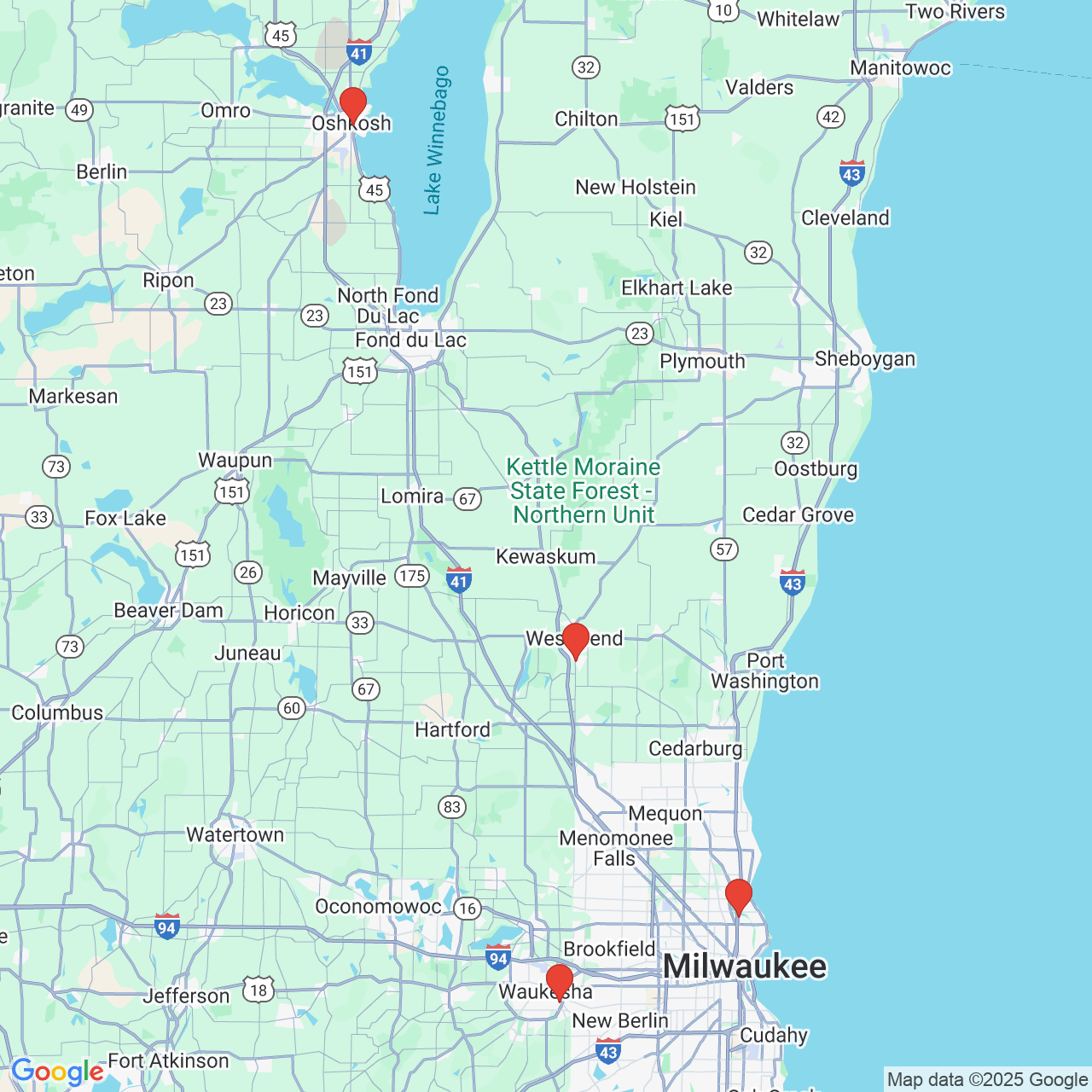
We have 4 locations in Wisconsin.
"Mr. Mishlove was worth every penny and then some. I would consider him the Michelangelo of the DUI defense world.
He is professional, dedicated, and pours his heart into his job. I would give him 10 stars if I could." Ronald S.