Two States,
Two Systems,
One Trap
Illinois drivers arrested in Wisconsin are usually told two things:
“Since you have an Illinois license, the case doesn’t matter.”
“You need an Illinois defense lawyer to handle consequences at home.”
Both of these are absolutely wrong.
An out-of-state DUI can be stressful and confusing. At Mishlove & Stuckert, LLC Attorneys at Law, we can help Illinois residents handle their arrest. While we operate out of Wisconsin, our skilled lawyers are familiar with interstate laws and have valuable partnerships with attorneys in Illinois who can help you reinstate your license if you are convicted.
If drivers aren't represented by a Wisconsin DUI lawyer, they can find themselves in trouble with the Illinois Secretary of State. For Illinois drivers stopped in Wisconsin, the case is more serious than if they had been stopped in Illinois. Why?
Even though an Illinois DUI is a very serious charge, the actual consequences for a person charged with first-offense DUI in Illinois are not as serious. Typically in Illinois, they plea bargain and receive a reduced charge or "court supervision."
Under this type of negotiation, the Illinois driver's license is suspended for a few months. If the driver completes court-ordered classes, the case is dismissed, and there is no DUI on the record.
By the time Illinois drivers get their first DUI conviction, they will have had at least one other DUI arrest. Therefore, the consequences for a repeat offender in Illinois are quite severe and can include license revocation for an indefinite term of one year to life.
Plea bargaining is strictly limited by law in Wisconsin OWI cases. So, if you are charged with a first-offense DUI, a plea bargain is not the rule, it is a rare exception. If you win your case (as many of our clients do) you will have no conviction on your record. If you lose or plead guilty, however, you will have an OWI conviction on your record and may be subject to various penalties in Wisconsin, including some that can affect your driving status in Illinois.
“I owe a great debt of thanks to Andrew Mishlove. He successfully defended me in an OWI case that endured for more than 6 ½ years in the Wisconsin judicial system, including a detour through the Wisconsin State Supreme Court system, and ultimately led to a showdown in an Ozaukee County criminal court resulting in a not-guilty verdict returned by a 12-member jury in February 2023.”
—Ries, 5-Star Review
If you are convicted of a first-time OWI offense, the following consequences may apply:
License revocation for six to nine months
Fines of $150 to $300, plus court costs
Alcohol assessment or mandatory counseling
Mandatory installation of an Ignition Interlock Device (if BAC was .15 or higher)
The OWI conviction can remain on your record for a lifetime
It is important to know that most of these penalties only apply within the borders of Wisconsin. However, the state will report the OWI conviction to Illinois. Typically, the State of Illinois will issue a reciprocal revocation order. This means that the Illinois license will also be revoked, possibly for a long time.
A Wisconsin OWI conviction will be treated as though it is a DUI conviction in Illinois. As a result, drivers will be subject to the harsher penalties set forth by the state of Illinois. Since a first DUI offense in Illinois is typically reduced, the first conviction is considered more serious and treated as a repeat offense. The first DUI conviction in Illinois has the same consequences as if it were the second or third arrest because there is no eligibility for court supervision in Illinois for a Wisconsin conviction.
So, what happens? The Illinois license is revoked indefinitely for a term of one year to life. Because a Wisconsin OWI can have such a significant impact on driving status in Illinois, it is critical that drivers discuss their case with the team at Mishlove and Stuckert, LLC Attorneys at Law. We will do everything we can to prevent an OWI conviction; if drivers are convicted, we work with skilled attorneys in Illinois who can work with us to minimize the amount of time that your license is revoked in your home state.
Defense lawyer Andrew Mishlove is acknowledged as one of the state's leading experts in handling these types of cases for Illinois drivers. He literally wrote the book on the subject: Mishlove and Ramsell, Handling OWI Cases For Those Illinois Drivers, The Wisconsin Lawyer, March 2007.
At Mishlove and Stuckert, LLC Attorneys at Law, we know the complicated interstate issues surrounding drunk driving arrests. We work closely with the best Illinois lawyers to defend your case and get the best possible results.
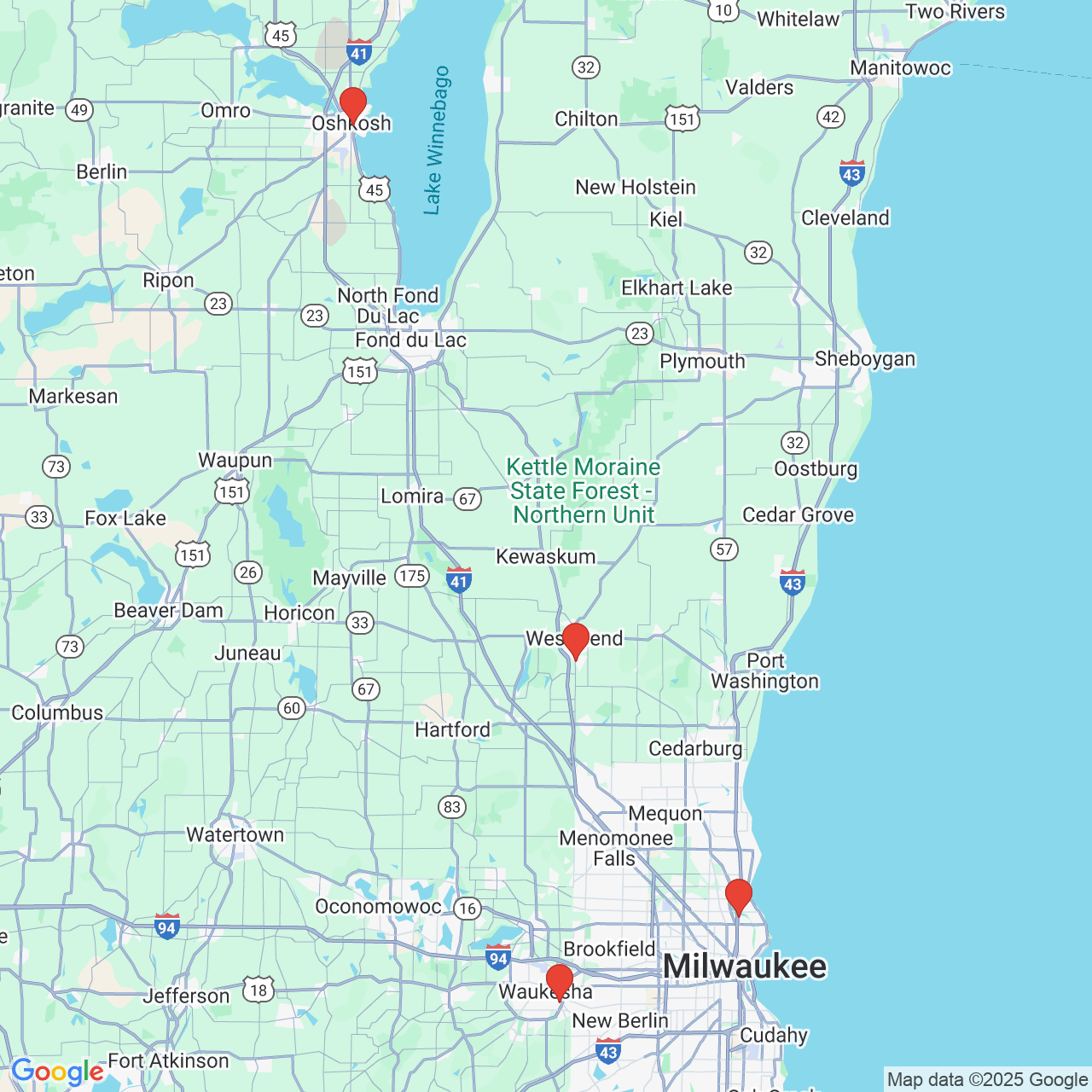
We have four conveniently located offices in Milwaukee, Oshkosh, West Bend, and Waukesha.
According to WI state laws, it is illegal for drivers to operate a motor vehicle:
If a driver is a repeat offender with three or more previous OWI convictions, the BAC limit is lower, at 0.02.
Drivers under 21 years of age are subject to the absolute sobriety law and can't have any amount of alcohol in their system.
Statutory Limits on Penalties for OWI Convictions
When a person is convicted of OWI, a judge will determine how harsh the penalties will be. However, the judge has to remain within the statutory limits set forth by the state. When aggravating circumstances are involved, such as driving with a minor or pregnant woman, having a high BAC, or an accident causing injury or death, the consequences are even more severe. The general guidelines for first-time and repeat offenders are as follows:
| Offense | Fines | Jail Time | License Revocation | IID | Restricted License |
|---|---|---|---|---|---|
| First Offense | $150-$300, plus court costs | None | Six to nine months | None if your BAC was under .15 | You can apply immediately |
| Second Offense | Up to $1,100, plus court costs | Five days to six months | Up to 18 months | Mandatory installation (or 24/7 sobriety program) | You can apply 45 days after conviction |
| Third Offense | Up to $2,000, plus court costs | 45 days to a year | Two to three years | Mandatory installation (or 24/7 sobriety program) | You can apply 45 days after conviction |
| Fourth Offense | Up to $10,000, plus court costs | 60 days to six years | Two to three years, or a lifetime revocation if the fourth offense is committed within 15 years of the third offense | Mandatory installation (or 24/7 sobriety program) | You can apply 45 days after conviction |
| Fifth and Sixth Offense | Up to $25,000, plus court costs | Six months to 10 years | Two to three years | Mandatory installation (or 24/7 sobriety program) | You can apply 45 days after conviction |
| Seventh, Eighth, and Ninth Offense | Up to $25,000, plus court costs | Three to 12.5 years | Two to three years | Mandatory installation (or 24/7 sobriety program) | You can apply 45 days after conviction |
| Tenth and Subsequent Offenses | Up to $50,000, plus court costs | Four to 15 years | Two to three years | Mandatory installation (or 24/7 sobriety program) | You can apply 45 days after conviction |
“I highly recommend Mishlove & Stuckert. I was charged with an OWI in 2019 and due to a backup in the court system, just had my day in court a couple of weeks ago [in 2022]. During the time leading up to my trial, Andrew Mishlove proved to be a fantastic advocate and sought to understand the incident and the story behind it... He is an absolute expert in field sobriety testing, so Andrew was able to leverage that knowledge to show the tests performed on me were wrongly administered.”
—Austin, 5-Star Review
Most drivers aren't legally obligated to submit to field sobriety testing. However, if you refuse a field sobriety test, you can expect to be taken into custody for further testing.
Under the state's Implied Consent law, any person who operates a motor vehicle is required to submit to chemical tests after being arrested for operating a vehicle while intoxicated. This includes blood, breath, and urine tests. However, you are not required to take these tests in the field, and can instead request to go to the police station for testing.
If you refuse to take these tests entirely, the consequences are as follows:
You lose your license for a year and have to have an IID device installed in your vehicle (or undergo a 24/7 sobriety program). You can apply for a restricted license after 30 days.
You lose your license for up to two years and have to have an IID device installed in your vehicle (or undergo a 24/7 sobriety program). You can apply for a restricted license after 90 days.
You lose your license for three years and have to have an IID device installed in your vehicle (or undergo a 24/7 sobriety program). You can apply for a restricted license after 120 days.
Mishlove & Stuckert, LLC Attorneys at Law has been rated the #1 OWI/DUI law firm in the state by Wisconsin Law Journal Reader Rankings. Our OWI/DUI specialists have been highly rated by organizations including:
To speak with one of our board-certified OWI/DUI defense specialists, request a consultation online or call us at (414) 332-3499.
Locations
We have 4 locations in Wisconsin.
"Mr. Mishlove was worth every penny and then some. I would consider him the Michelangelo of the DUI defense world.
He is professional, dedicated, and pours his heart into his job. I would give him 10 stars if I could." Ronald S.